


Two products may look almost identical and carry the same name. Yet the real difference often begins long before they reach the shelf: in their origin, production method, processing and journey to the customer.
For Nordic Prime, origin is more than just information on a label. It is the first step in understanding a product and deciding whether it deserves to be selected.
“Norwegian salmon”, “Nordic herring” or “Swedish product” provide a starting point. But country of origin alone does not define the final quality.
What matters is the quality of the raw material, the producer, the production method, the processing conditions, maintaining the cold chain, and how the product reaches the customer.
That is why, for us, origin and traceability go hand in hand. It is not enough to know where a product comes from. We also want to understand the journey it has taken.
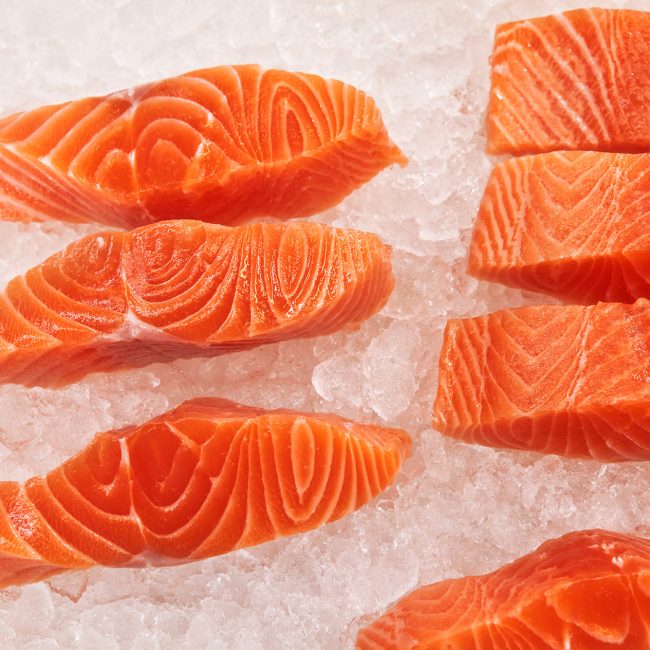


Traceability means the ability to track a product and the essential information about it throughout the supply chain.
In the case of fish, this may include information about the species, origin, production method, processing, and the stages the product has gone through before reaching the market.
For Nordic Prime, traceability is not just a technical requirement. It is a form of transparency. The more clearly we know what we are buying, where it comes from, how it was produced and who has handled the product, the better informed our selection can be.
Independent certifications can provide an additional level of verification and traceability.
ASC – Aquaculture Stewardship Council is associated with responsible aquaculture and applies to products from fish farms that meet ASC standards.
MSC – Marine Stewardship Council is associated with wild-capture fisheries and certifies products from fisheries assessed according to its sustainability and traceability standards.
EU Organic / Organic identifies products that comply with European requirements for organic production, control and labelling. The EU organic logo may only be used on products certified in accordance with the applicable rules.
In Sweden, systems such as IP Certified Production are used in certain sectors of food production to verify requirements related to production, food safety and traceability.
For Nordic Prime, these certifications are additional points of reference, not sufficient criteria on their own. Origin, raw material, producer, processing method and taste remain equally important.
A certification verifies specific criteria. On its own, it does not guarantee a premium product and does not replace the evaluation of the final product.
Good salmon does not automatically become good smoked salmon simply because the raw material comes from a recognised origin.
After origin come selection, transport, temperature control, preparation, smoking and packaging. Each stage can either preserve the quality of the raw material or reduce it.
The same principle applies to herring, shrimp, roe and other Nordic specialties.
That is why we look at the product as a whole: origin, producer, process and final result.
Origin is important. But it is only the beginning.
Nordic Prime does not look for products simply because they come from Scandinavia, nor do we build our selection around logos or broad claims about “Nordic quality”.
For each product, we want to be able to answer a few questions clearly: where does it come from, who produces it, how is it made, and what does it offer when we taste it?
Documentation and traceability help us understand the product’s journey. Certifications can confirm specific standards. The producer’s experience helps us understand what lies behind the process.
But in the end, the product itself must live up to all of these claims.
Origin tells us where it comes from. Traceability shows the journey. Taste makes the difference.

No account yet?
Create an AccountWe use essential cookies for the website to function and, with your consent, cookies for analytics and other features. You can accept all cookies, refuse non-essential ones or set your preferences. You can change your choice later.
